What Actually Affects Eye Health, Beyond Any Single Supplement
Routine professional eye exams, UV protection, blood sugar management and screen-use habits all have well-documented effects on long-term eye health.
Understanding that fuller picture helps set realistic expectations for what any general vision supplement can and cannot do.
Routine professional eye exams
Many serious eye conditions, including glaucoma and early AMD, can progress with few or no early symptoms. Regular dilated eye exams remain the most reliable way to catch changes early.
UV protection
Cumulative UV exposure is a well-documented factor in cataract development. Sunglasses that block UVA and UVB and wide-brimmed hats are simple, evidence-based habits.
Blood sugar and blood pressure management
Diabetic retinopathy and hypertensive changes to the retina are directly tied to blood sugar and blood pressure control, independent of any supplement.
Screen habits
The 20-20-20 rule — looking at something 20 feet away for 20 seconds every 20 minutes — is a well-known, low-cost habit for reducing digital eye strain.
Smoking status
Smoking is a well-documented risk factor for AMD and cataracts. It's also directly relevant to how beta-carotene supplementation should be considered, since some research links high-dose beta-carotene to different outcomes in smokers.
Where nutritional support realistically fits
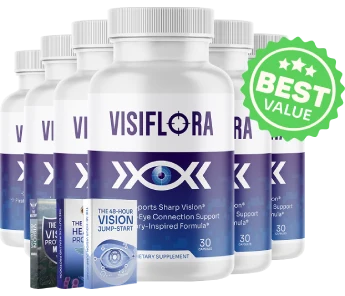
Applying this to VisiFlora
Formulas like VisiFlora are designed to supply general nutritional inputs relevant to eye health, genuinely useful additions layered on top of the habits above — not a shortcut around them.